The first time a patient asked me if Botox was “worth it,” she was a project manager who tracked every dollar she spent. She had a wedding in five months, a busy calendar, and a forehead line that deepened with every spreadsheet. She loved the idea of smoother skin, but she needed numbers, timelines, trade-offs. We opened her planner, estimated units, multiplied by price per unit, and compared that to the results she wanted. She booked the appointment, not because I promised miracles, but because the equation finally made sense.
That is the crux of evaluating Botox treatment: translating a cosmetic wish into a real plan with clear costs, realistic benefits, and a maintenance rhythm that respects your life.
What Botox does, and what it does not
Botox cosmetic injections soften expression lines by temporarily reducing the pull of specific muscles. Think dynamic wrinkles, not volume loss. The classic trio includes Botox for forehead lines, Botox for frown lines between the brows, and Botox for crow’s feet around the eyes. It also helps with a subtle Botox brow lift, a lip flip, and targeted lines like bunny lines along the nose or a pebbled chin.
Expect movement refinement rather than a frozen mask. Good Botox treatment looks like you on a good night’s sleep. If your main concern is a deep nasolabial fold or a hollowing under the eyes, Botox won’t add volume there. That is where fillers or other skin rejuvenation options enter the conversation.
On timing, you typically notice Botox effects in 3 to 5 days, see peak results by day 14, and ride those results for 3 to 4 months. Heavier muscles like the masseters along the jaw may hold results for 4 to 6 months. If you are planning around events, a two week buffer to your milestone is smart.
How price is built: the anatomy of a Botox cost
When patients search “botox near me” or “botox price,” they run into a confusing spread. One clinic posts a per unit price. Another quotes a flat rate per area. A friend brags about a bargain voucher. The numbers only make sense if you understand dosing along with quality.
Most U.S. Clinics charge per unit. A common range runs 10 to 20 dollars per unit for standard on-label brands. On average, a glabella area (the frown lines) uses 15 to 25 units. The forehead can take 6 to 20 units depending on your anatomy and how much movement you want to keep. Each crow’s foot averages 6 to 12 units per side. Little refinements like a lip flip might use 4 to 8 units total, and a Botox brow lift typically needs 2 to 4 units per side. Jawline masseter treatment can require 20 to 40 units per side based on muscle bulk and bite strength.
Here is what that looks like in actual numbers for cosmetic zones:
- Frown lines: 15 to 25 units, often 180 to 400 dollars at the typical per unit price. Forehead lines: 6 to 20 units, about 100 to 350 dollars depending on your dose and clinic pricing. Crow’s feet: 12 to 24 units for both sides, roughly 150 to 450 dollars. Lip flip: 4 to 8 units, commonly 60 to 160 dollars. Brow lift tweak: 4 to 8 units, 60 to 160 dollars. Masseter slimming or bruxism relief: 40 to 80 units total, 500 to 1,400 dollars.
When a clinic quotes “one area,” clarify which muscles and how many units that includes. An area is not standardized, and forehead dosing always relates to the strength of the frown complex. Skimping in one area while over treating another is how you end up with a heavy brow or uneven smile.
Geography matters. High-rent cities often sit at the upper end of the price range. Medical oversight matters too. A board-certified dermatologist or plastic surgeon with a busy injectable practice may charge more than a spa with minimal physician involvement. Both cost and safety tend to reflect product sourcing, sterile technique, injector training, and the time your provider spends assessing your face at rest and in motion.
Why values differ between patients
If your main concern is Botox for wrinkles you see when you animate your face, you are the prototypical candidate. The value shows up every time you look in the mirror or step into bright daylight. Patients who are on camera, meet clients all week, or who squint and furrow with migraines often notice the benefits most.
If your lines are etched at rest, Botox still helps by reducing the repetitive folding that keeps carving the groove. It can soften a static line over time, but it will not fill it. Pairing Botox wrinkle injections with skincare that supports collagen, or with microneedling or laser resurfacing, changes the curve of improvement.
Younger patients who use Botox as an anti aging treatment tend to need fewer units and can go longer between sessions once a pattern is set. Older patients often see a strong first result, then refine the plan with a touch-up and a skin quality treatment for best value.
The math: cost per month, not just per visit
The decision rarely hangs on a single session. Since Botox results last 3 to 4 months for most faces, your “annual plan” is two to four sessions.
If you treat the frown lines, forehead, and crow’s feet together with a total of 40 to 60 units, you might spend 500 to 1,000 dollars per visit in most markets. At three visits per year, that becomes 1,500 to 3,000 dollars, botox near me which translates to 125 to 250 dollars per month. Some patients find that similar to their salon budget, others consider it a major investment. Looking at cost per month makes the choice clearer.
With masseter treatment for bruxism, dosing can run 40 to 80 units per session, often every 4 to 6 local botox near me months. If you grind your teeth, wake up with tension headaches, or are wearing through night guards, the value may include fewer dental repairs. Patients often report quieter jaws and slimmer lower faces after the second session as the muscle atrophy settles in.
What you are actually paying for
- Product authenticity and correct dilution. Botox cosmetic injections must be sourced through the proper channels and reconstituted precisely to maintain potency. Injector expertise. Dose, depth, and placement separate a soft glance from a heavy brow. Subtlety is learned. A tailored map. The best injectors watch you speak, smile, read, and frown, then place units where your muscles actually pull, not where a template says they should. Safety protocols. Clean technique, appropriate skin prep, and sterile supplies matter for a quick cosmetic treatment. Follow-up and adjustments. A two week check-in can catch asymmetry or a spot that needs one or two more units.
How results really look and feel
Two days after treatment you might see nothing and wonder if anything happened. By day three to five, expression lines soften. By day seven to ten, the treated area settles into a quieter baseline. By day fourteen, you see the true endpoint. Then you coast, with slow return of motion as the weeks pass. Most patients prefer a maintenance session just as they notice movement returning, rather than waiting until everything is back.
Photos tell the truth. Good before and after images show improved smoothness with natural brow shape and eye openness preserved. In the crow’s feet, skin crinkles but no longer scrunches into deep fan lines. The forehead looks relaxed, not shiny or immobile. If you prefer a “baby Botox” effect with lighter dosing for micro-movement, say so during your Botox consultation. Your injector can stage your Botox session in conservative passes.
Safety, side effects, and the risk of “too cheap”
Done well, Botox is a safe, minimally invasive treatment with minimal downtime. Expect a few pinpricks, maybe a tiny welt where saline carries the product under the skin, and the occasional pinpoint bruise. Mild headache the day after forehead treatment shows up in a small minority of patients and resolves with hydration and over-the-counter relief.
The complications that matter are rare but real. Eyelid ptosis, a temporary droop, can occur if product migrates into the levator muscle. The risk is generally low, often quoted at under a few percent for glabella treatments, and it fades as the product wears off. Brow heaviness comes from over treating the frontalis without balancing the frown complex. Smile asymmetry can occur if units near the mouth track into muscles that lift the corners. These issues are avoidable with careful mapping and conservative first dosing.
The demand for “cheap Botox” invites corner cutting. Beware of suspiciously low prices. Counterfeit product circulates in some markets. Over-dilution, rushed appointments, and lack of medical oversight are common in bargain settings. A certified injector will tell you exactly what brand they use, how many units they plan, and what to expect.
Cosmetic and medical uses, and how coverage differs
Botox is more than a wrinkle reduction tool. For chronic migraine, the standard protocol uses around 155 units across the scalp, forehead, temples, and neck every 12 weeks, sometimes with an extra 20 to 40 units tailored to your pain map. Many insurers cover this when criteria are met. For hyperhidrosis, the underarms typically receive 50 to 100 units per side with relief that can last 4 to 9 months. Insurance coverage varies, but documentation of failed topical treatments can help. For masseter hypertrophy and teeth grinding, Botox masseter treatment with 20 to 40 units per side reduces clenching and can reshape a bulky jawline over several sessions. Cosmetic goals usually are self-pay, while medical injections may be covered if strict requirements are met.
If you are debating Botox therapy primarily for migraine or excessive sweating, value goes beyond appearance. Fewer sick days, fewer shirts ruined by sweat, and fewer emergency trips to the dentist for cracked molars change the calculus.
Alternatives and complements that shift the value equation
If your main goal is smoothing fine static lines, retinoids, daily sunscreen, and a consistent skin care treatment plan often deliver a strong baseline over a few months. When texture is the bigger issue than muscle pull, looks into light resurfacing with lasers, chemical peels, or microneedling supported by good aftercare. If volume loss carves folds or hollows, a hyaluronic acid filler addresses what Botox cannot. In many cases, the best value is staged: Botox wrinkle relaxing injections to quiet expression lines, a small filler touch to soften fixed creases, and diligent daytime SPF to protect the result.
There is also the question of lifestyle. Sleep, hydration, and stress show up on the face. Botox can soften the readout, but it cannot rewrite the code by itself. Patients who see the best long-term value treat Botox as part of a broader aesthetic and wellness routine, not a one-off rescue.
Three real-world cost scenarios
A 31-year-old teacher wants her elevens to stop photobombing every selfie. On assessment she has strong corrugators and a lightly active forehead. We plan 20 units to the glabella and 8 units to the forehead. At 14 dollars per unit, her visit totals 392 dollars. She returns three times per year, about 1,176 dollars annually, or 98 dollars per month. She keeps good brow movement and looks like herself. After a year, we lighten the forehead to 6 units and she holds results for four months at a time.
A 44-year-old sales director wants Botox for forehead lines and crow’s feet, plus a small Botox brow lift to open her eyes without a surgical step. We map 16 units forehead, 20 glabella, 24 crow’s feet, and 6 for a lift tweak, total 66 units. At 13 dollars per unit, the visit costs 858 dollars. She maintains every four months, about 2,574 dollars per year, which she compares to her hair color and boutique fitness memberships. Her makeup applies faster, and she no longer raises her brows to look alert in meetings, which used to deepen the lines she hated.
A 36-year-old software engineer with night-time bruxism and a squared lower face chooses Botox masseter treatment. We start with 25 units per side, recheck in 12 weeks, and repeat at 20 units per side because his jaws are quieter. At 12 dollars per unit, the first visit is 600 dollars. He needs two to three sessions in the first year, then can often hold results longer, bringing the annual budget to roughly 1,200 to 1,800 dollars. His dentist notices less wear, and his lower face looks narrower by the second session.
The consultation: what a good plan sounds like
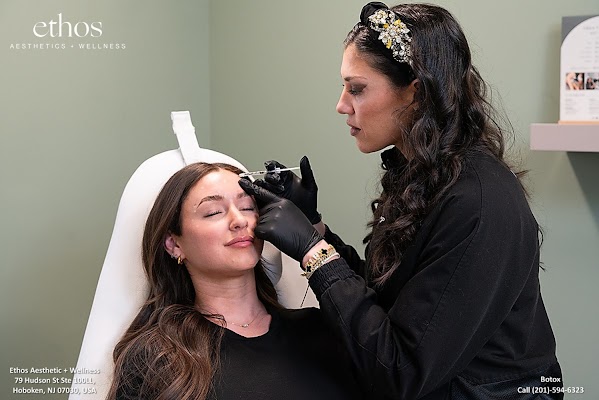
A proper Botox appointment begins with a clear look at your goals, your facial anatomy, and your history with injectables. Good providers ask you to animate in several ways: frown, raise your brows, smile with your eyes, flare your nostrils, purse the lips. They watch the pattern rather than assuming a template. They explain what Botox can and cannot do for your specific lines, and whether another treatment would deliver better return.
Expect a precise unit plan that names each area. Ask what happens at two weeks if you are underwhelmed or asymmetric. Ask who will inject you, what their credentials are, and what products they use. You should walk out with a treatment map you could explain to a friend.
Two honest myths that cost people money
The first is that you should “start as early as possible.” You should start when dynamic lines bother you and you are ready to maintain the result. If you barely create lines when you emote, wait. If you crease at the first hint of expression, a small dose can preserve smoothness and prevent deeper etching.
The second is that you should blast the forehead while ignoring the frown complex. That is the fastest way to a heavy brow. A balanced plan treats opposing muscles with just enough dose to keep your natural lift.
A quick decision checklist
- Identify your top two concerns, not five. Prioritize the lines that steal your attention in daylight and in photos. Get a unit-based estimate with ranges. Know what happens at the conservative and fuller ends of your dose. Translate the visit into a monthly number. If the per month figure feels reasonable, you will not resent the maintenance. Ask for a two week follow-up. Tiny adjustments create the polished finish you expect from professional treatment. Choose a certified injector with a portfolio that matches your taste. Natural movement in their results usually predicts you will like your own.
Preparing and recovering without drama
Treat the week before your session like you would a minor procedure. Skip fish oil, high-dose vitamin E, and nonsteroidal anti-inflammatories if your physician agrees, as these can increase bruising. Show up without makeup on the areas to be treated. After your Botox facial injections, avoid lying flat for about four hours, skip heavy workouts until the next day, and resist massaging the treated spots. Makeup can go back on the same day with a light touch. If a small bruise appears, a dab of concealer and patience solve it.
What counts as a fair price
If you are shopping for a Botox clinic, the lowest number is not the only metric. Basing your choice on cost per unit alone ignores technique, safety, and time. What I tell my own family members is simple. Pick the injector whose results you would gladly wear, the clinic where you feel unrushed and heard, and a price that makes sense when you multiply it by three or four visits per year. If you find yourself rationalizing a deal that does not feel safe, step back.
Patients who get the best value treat their Botox cosmetic procedure like a small, recurring investment in how they present to the world. They keep a steady rhythm, communicate openly with their Botox provider, and adjust the dose based on seasons and life stages. Over time, they pay less for fixes and more for finesse.
Final thoughts from the chair
The teacher from the opening story returned a month after her wedding with a stack of photos and a grin. Her makeup artist had nothing to hide. Her brows lifted easily, her crow’s feet softened into a cheerful curve instead of a deep fan, and no one asked if she was tired. The total for two pre-wedding visits and a small touch at two weeks felt like money well spent to her because the result matched her goals.
Botox is not a status symbol, and it is not a magic wand. It is a precise, medical aesthetic treatment that, when planned well, turns into a dependable line item in a life you have chosen. If you want smoother expression lines, if you need help with migraines or sweating, or if your jaw tension is carving your molars, schedule a Botox consultation with a certified injector. Bring your questions, your calendar, and your priorities. A clear map, an honest dose, and steady maintenance create the kind of before and after that does not shout. It just looks like you, well rested, on purpose.